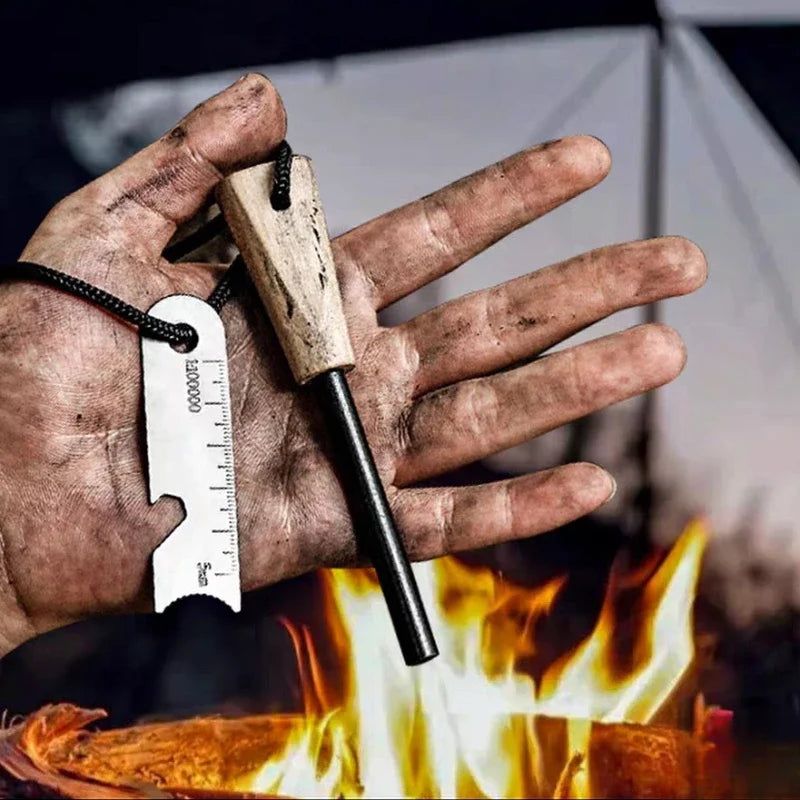
Choose a campfire starter kit that covers ignition, prepared tinder and a plan for suitable firewood. A spark tool alone is not a complete setup, and a bundle does not replace water for extinguishing the fire, local permission or practice.
- Choose a campfire starter kit by function, not the number of accessories.
- A fire starter rod supplies sparks; prepared tinder helps turn them into flame.
- A pocket saw cuts wood to length. It does not split logs.
- SurvivX Gear’s kit pairs a rod, fatwood and a pocket chainsaw; pack a backup ignition source separately.
Why the contents matter
A pouch full of tools can still leave you missing something important. Before buying, separate the jobs: making a spark or flame, catching that ignition, feeding the fire and putting it out.
Browse fire starters and fire-starting kits with those jobs in mind. Buy the parts your load-out lacks rather than replacing gear you already know how to use.
How do you choose a campfire starter kit?
- Check the ignition tool. Identify what actually makes the spark or flame. Look for clear instructions and a grip you can control.
- Check the tinder. Find out whether the kit includes material to catch the ignition. Do not assume a bare rod lights a log.
- Plan for kindling and fuel. Decide whether you will buy local firewood or prepare permitted wood at camp.
- Protect the contents. Keep tinder dry and separate sharp tools from loose supplies.
- Pack what the bundle leaves out. Include a backup ignition method and enough water to fully extinguish your fire.
The best purchase is the one that fills a real gap. If your campground supplies cut firewood and you already carry a lighter, another cutting tool might be unnecessary.
Which kit type fits your trip?
| Setup | Best for | Useful feature | Main limitation |
|---|---|---|---|
| Lighter with prepared tinder | Campers who want a direct flame | Simple ignition sequence | Depends on a working lighter and its fuel |
| Fire starter rod with prepared tinder | Campers willing to practice spark ignition | Keeps ignition and tinder as separate components | Requires technique; sparks alone do not guarantee a fire |
| Rod, tinder and pocket saw | Campers who also need to cut permitted wood | Adds a way to cut suitable wood to length | A saw adds gear and does not split logs |
These are packing choices, not field-test rankings. Match the setup to the work you will actually do.
Choose a direct flame when simplicity comes first
A lighter and prepared tinder suit a camper who wants a straightforward lighting method. They also make a useful backup when a spark-based method proves difficult.
The trade-off is dependence on the lighter’s condition and fuel. Check it before leaving rather than assuming the one in your truck still works.
Choose a rod when you will practice with it
A rod makes sense when you want a separate spark tool and are willing to learn its technique. Practice with the exact striker and tinder you intend to pack, following the manufacturer’s instructions in a safe, permitted setting.
The limitation is the gap between producing sparks and building a sustained fire. Good packaging cannot remove that learning step.
Add a saw only when you need to cut wood
A pocket saw is useful when the trip calls for cutting suitable, legally collected wood to manageable lengths. It is not permission to cut live trees or collect wood where doing so is prohibited.
It also is not a splitting tool. Do not buy a bundle expecting a hand-powered chain to perform every wood-processing job.
Where the SurvivX Gear kit fits
The Campfire Starter Kit – Fire Starter, Fatwood & Pocket Saw lists a fire starter rod and striker, a 170g tin of fatwood sticks, and a pocket chainsaw.
SurvivX Gear’s Campfire Starter Kit suits campers who want ignition, carried tinder and a wood-cutting tool in one bundle. That is a contents-based recommendation, not a claim of hands-on testing or guaranteed wet-weather performance.
Its practical advantage is the combination of different functions. Its limit is equally clear: the listed contents do not include a lighter, extinguishing water or your campsite’s firewood.
Skip the bundle if you already own those components and use them confidently. Replace the missing part instead.
What changes the right choice?
- Campsite rules: Some locations restrict both fires and wood collection. Confirm before packing around an open fire.
- Your existing gear: A reliable tool you know is more useful than a duplicate you have never used.
- Fuel arrangements: Purchased local firewood and permitted downed wood create different cutting needs.
- Weather exposure: Carrying tinder does not help if storage leaves it soaked.
- Practice: Judge the full sequence from ignition to burning kindling, not just whether the rod throws sparks.
Check the campsite before lighting
The National Park Service’s Campfires guidance, reviewed for this guide on November 25, 2026, advises checking local rules and fire conditions, using local firewood, keeping water nearby and never leaving a campfire unattended. It also advises keeping tents, gear and other flammable objects at least 15 feet away and upwind of the firepit.
Use those precautions alongside the site’s current rules. If fires are prohibited, leave the campfire unlit; owning a fire kit does not create an exception.
Douse and stir the remains until fully extinguished and cool. Do not leave hot coals behind or assume the absence of flames means the fire is out.
FAQ
What should a campfire starter kit include?
Look for an ignition tool and prepared tinder, then plan separately for kindling, local firewood and extinguishing water. Some bundles add a cutting tool, but that is useful only when your trip needs one.
Do I still need a lighter if I carry a fire starter rod?
A lighter gives you a separate ignition method. Check it before the trip rather than relying on an unfamiliar rod as your only option.
Does a pocket chainsaw split firewood?
No. A pocket chainsaw cuts suitable wood to length; it does not split logs.
Should I buy a bundle if I already have a fire starter?
Buy a bundle only if its other components fill gaps in your gear. If you already have suitable tinder and a cutting tool, replacing one missing item is the simpler choice.
Is a waterproof fire starter enough for rainy camping?
No. A waterproof claim about one tool does not mean the tinder, kindling and firewood will ignite when wet. Protect your supplies and practice with your actual setup.
Can I use a fire starter kit during a burn ban?
Do not light a campfire where current restrictions prohibit one. Check the rules for the exact location before your trip and again on arrival.
One last thing
Pack for putting the fire out, not just getting it started. Water and time to extinguish the coals belong in the plan before you strike anything.
Related guides
Source: National Park Service, Campfires, safety and firewood guidance; accessed November 25, 2026.